
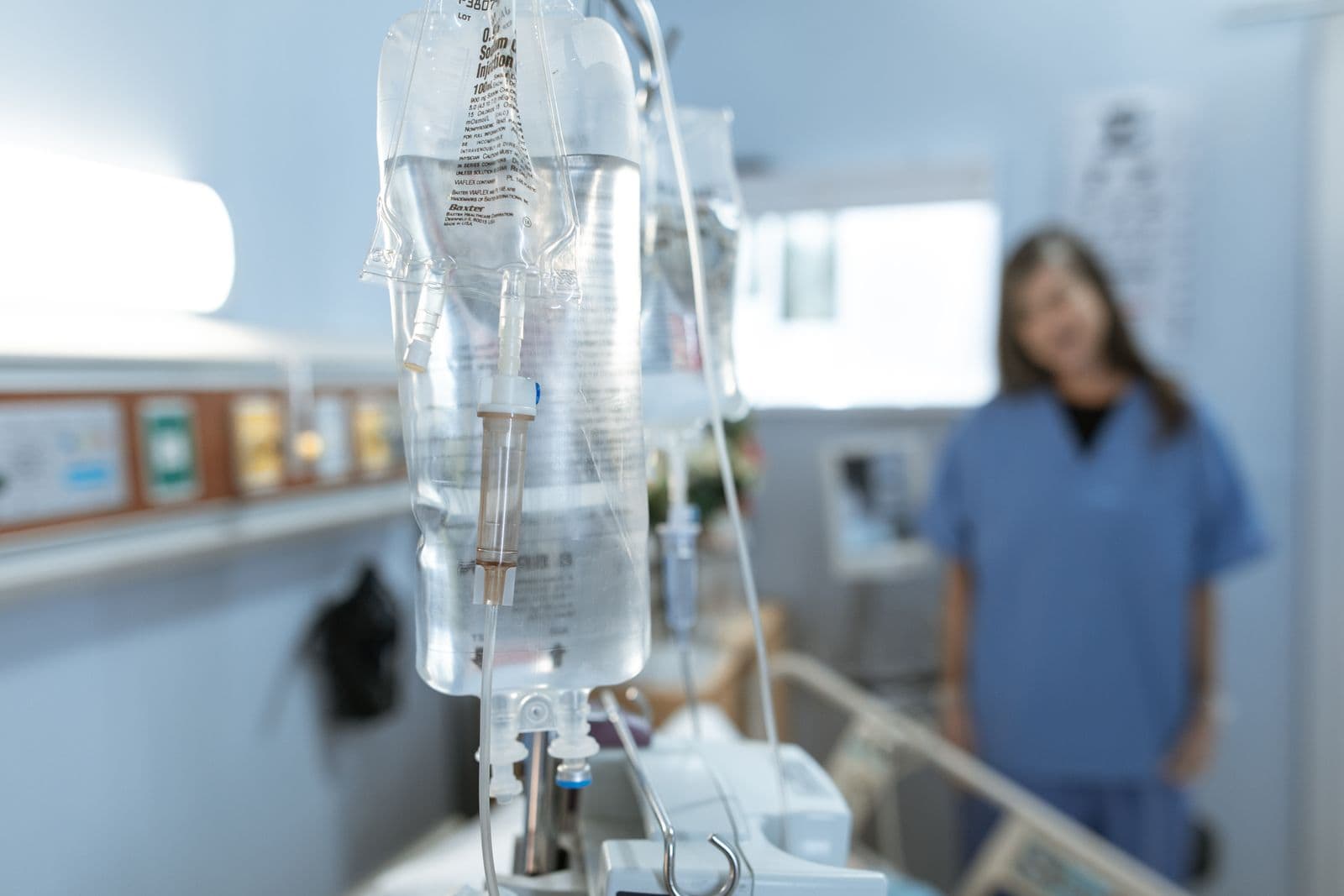
IV drip lounges are all over Los Angeles, and their menus promise a lot: more energy, a stronger immune system, a cure for your hangover, glowing skin and a “detox.” Some of that is real. Much of it has never been proven. Here is an honest look at the benefits of IV therapy that research supports, the claims it doesn’t, and how to decide whether a drip is worth it for you.
Quick answer: IV therapy has two well-proven benefits. It replaces fluids and electrolytes quickly when you are dehydrated, and medical teams use IV nutrients to treat a diagnosed deficiency when the gut can’t absorb enough. An IV can also raise blood levels of some vitamins far higher than pills can, but a higher level in your blood is not the same as better health. For popular wellness goals like more energy, fewer colds, hangover relief, detox or anti-aging, good studies have not shown that IV drips work. If you try one, choose a clinic where a licensed provider reviews your health first.
Below, we go through the evidence claim by claim and explain how IV therapy in Burbank works at XELOR.
What is IV therapy?
IV therapy delivers fluid through a small tube placed in a vein, usually in your arm or hand. A wellness drip is typically a bag of IV fluid with vitamins and minerals added, such as vitamin C, B vitamins or magnesium. Because it goes straight into your bloodstream, it skips your stomach and gut. Most drips at XELOR take 45 to 60 minutes.
What are the proven benefits of IV therapy?
1. Fast rehydration
This is the best-supported benefit. Cleveland Clinic notes that if you’re dehydrated, IV therapy can quickly restore your body’s fluid levels. The fluid and electrolytes go straight into your blood, so they don’t depend on your stomach. For mild dehydration, though, drinking water or an electrolyte drink usually works well too. Read when IV therapy for dehydration helps and when water is enough.
2. Treating a diagnosed deficiency
Some people can’t absorb enough vitamins or minerals through the gut, for example after certain weight-loss surgeries or with some bowel diseases. For them, nutrients given by IV or by injection are a standard medical treatment. The key word is diagnosed: a blood test confirms the problem first, and the treatment targets it. Cleveland Clinic draws the same line between IV nutrients as medical treatment for a deficiency and IV drips as self-care.
3. Higher blood levels than pills
An IV can push some vitamins far above the levels your body can reach by mouth. Vitamin C is the clearest example. Based on figures from the National Cancer Institute, IV vitamin C can reach blood levels more than 60 times higher than the highest levels possible with pills.
But a bigger number in your blood is not the same as a health benefit. Most of the vitamins in a wellness drip dissolve in water, and your body does not store much of the extra. A large share leaves in your urine. Whether these short-lived peaks help healthy people feel or work better has not been shown in good studies.
What does the research say about popular IV therapy claims?
Here is how the most common promises hold up.
| The claim | What the research shows |
|---|---|
| More energy | Not shown in people without a deficiency. Ongoing tiredness has many causes, such as thyroid problems or anemia, that a blood test can find. |
| Stronger immunity, fewer colds | We found no good trials showing that an IV drip prevents colds or flu. Even daily vitamin C pills don’t lower how often most people catch colds. |
| Hangover relief | A 2022 review found only very low-quality evidence for any hangover remedy. Fluids help if you are dehydrated from vomiting. |
| Athletic performance | In a 2026 study, drinking water during exercise in the heat beat IV saline. Drug-tested athletes face limits on IV drips. |
| Chronic pain or fibromyalgia | In a 2009 trial, a Myers’ cocktail drip did no better than a placebo drip. |
| “Detox” | Your liver and kidneys clear waste. No drip has been shown to detox you. |
| Brighter or lighter skin | Little good research. The FDA has not approved any injectable product for skin lightening. |
| Anti-aging | Not shown. Studies of NAD+ drips are small and short. |
Immunity and colds
Vitamin C is the star of most “immunity” drips, and the best evidence on vitamin C and colds comes from pills. A Cochrane review of 29 comparisons with more than 11,000 people found that taking vitamin C regularly did not lower how often people in the general population caught colds. It shortened colds a little, by about 8% in adults and 14% in children. Starting vitamin C after a cold began had no consistent effect. The exception was people under heavy physical stress, such as marathon runners, skiers and soldiers, who caught about half as many colds. We found no good-quality trials testing whether an IV drip prevents colds or flu.
Fibromyalgia and the Myers’ cocktail
The Myers’ cocktail, a mix of magnesium, calcium, B vitamins and vitamin C, is the classic wellness drip. In a 2009 pilot trial, 34 adults with fibromyalgia were randomly assigned to weekly Myers’ cocktail infusions or weekly placebo infusions of plain IV fluid for 8 weeks. Both groups improved, and there were no significant differences between them on any measure. The researchers noted a high placebo response and said the drip’s benefit over placebo was still uncertain.
Hangovers
A 2022 review in the journal Addiction looked at 21 placebo-controlled trials of hangover remedies and found only very low-quality evidence that any of them work. IV drips have not been well tested for hangovers. If you have been vomiting and can’t keep fluids down, IV fluids can replace what you lost. If someone is confused, keeps vomiting or is hard to wake after drinking, call 911.
Athletes and recovery
In a small 2026 study in Sports Health, recreationally active men who drank water while exercising in the heat performed better, with a lower body temperature and heart rate, than when they received the same amount of saline by IV. If you compete in a sport that follows World Anti-Doping Agency rules, check before any drip. The 2026 Prohibited List bans IV infusions of more than 100 mL in a 12-hour period, even plain saline, unless they are given during hospital care, surgery or clinical tests.
Glutathione and skin
Glutathione is an antioxidant your body makes on its own, and it is a common add-on in “glow” drips. Research on IV glutathione for skin is limited. The FDA has warned that injectable skin lightening products, including some that contain glutathione, may be unsafe and ineffective, and it has not approved any injectable drug for skin whitening or lightening. If a clinic offers a drip to lighten your skin, skip it.
Why do people feel better after an IV drip?
Many people do feel better after a drip, and that feeling is real. There are a few likely reasons. If you were low on fluids, rehydrating can ease a headache or tiredness. An hour of sitting still in a calm room helps too. And the placebo effect is strong with IV treatments: in the fibromyalgia trial, people who got only plain IV fluid improved as well. None of this means you imagined it. It means that feeling better after one drip doesn’t prove the vitamins did the work.
What can’t IV therapy do?
- Cure, treat or prevent a disease
- “Detox” your body. Your liver and kidneys already do that.
- Make up for short sleep, skipped meals or no exercise
- Help you lose weight
- Explain why you are always tired. Ongoing fatigue calls for a checkup and blood work.
Medical experts agree on this. The Merck Manual notes that no published evidence has shown IV vitamin therapy works for any serious illness or chronic disease. Cleveland Clinic says there is limited scientific evidence of a direct general wellness benefit. A 2025 review concluded that IV vitamin therapy shows promise for specific medical needs, but that its effectiveness and safety as a wellness tool for healthy people remain uncertain.
How can you spot IV therapy hype?
In 2018, the Federal Trade Commission brought its first-ever case against an IV therapy marketer. iV Bars, a Texas company, had claimed its IV cocktails could treat cancer, heart failure, multiple sclerosis, diabetes and fibromyalgia. The FTC said those claims were false or not supported by competent and reliable scientific evidence. Its order bars the company from making such claims without that evidence.
Be cautious if a clinic:
- Promises to cure or treat a disease
- Talks about “flushing toxins” or a “detox”
- Skips your health questions before the drip
- Can’t tell you who places your IV or whether they are licensed in California
- Pushes you to buy a package before your first visit
California’s Board of Pharmacy calls IV hydration at a clinic a medical treatment that requires an exam by an authorized prescriber first. For more questions to ask, read our guide to whether IV therapy is safe and who should skip it.
Who might consider a wellness drip?
An IV drip may be worth a conversation if you are a generally healthy adult, you understand which benefits are proven and which aren’t, and you are comfortable paying out of pocket. People often book one after travel, a hard workout in the heat, or a stomach bug that has passed but left them drained.
Talk with a provider first if you:
- Have heart disease or heart failure
- Have kidney disease
- Have high blood pressure
- Are pregnant or breastfeeding
- Take prescription medicines
Cleveland Clinic lists heart disease, high blood pressure, kidney disease and pregnancy among the reasons to avoid IV vitamin therapy.
How does IV therapy work at XELOR?
- Consultation first. Every drip starts with a consultation with a licensed provider, who reviews your health history, your medicines and any heart or kidney conditions that could make IV fluids unsafe for you.
- The right drip, or none. Your provider recommends an option from our IV drip menu, or tells you if a drip isn’t a good idea right now. If you have been tired for weeks, your provider may suggest blood work first to look for a cause.
- Licensed hands. Your IV is given by a nurse practitioner, or by a registered nurse with a provider on site.
- Comfort. We use small, pediatric-sized needles. Most drips take 45 to 60 minutes, and NAD+ sessions can take longer.
XELOR Signature Hydration is $119, a balanced electrolyte drip for when you feel dehydrated or drained. XELOR Wellness is $179, a blend of essential vitamins and minerals and a good first drip if you are new to IV therapy. If you like a regular drip, the XELOR Wellness Club Foundational Membership is $89 a month and includes one XELOR Signature Hydration each month. See every drip on our IV drip menu and every price on our pricing page.
Anna Aghabekyan, APRN, DNP, FNP-C, is a board-certified family nurse practitioner at XELOR. IV therapy is given in person at our clinic at 1612 W Olive Ave, Suite 200, in Burbank.
Frequently asked questions
Are IV vitamins better than vitamins by mouth?
For most people, no. Food and oral supplements are the safer first choice. An IV makes the most sense when there is a clear reason for it, such as dehydration, or a diagnosed deficiency in someone who can’t absorb nutrients well.
How long do the effects of an IV drip last?
There is little research on wellness drips to answer this. Fluids help right away if you were dehydrated. Most of the extra water-soluble vitamins leave your body in your urine, so blood levels don’t stay high for long. How people feel afterward varies.
How often should you get IV therapy?
There is no research-based schedule. It depends on your health, your labs and your goals. Many of our patients come in about once a month, and your provider will suggest a plan that fits you.
Can IV therapy help you lose weight?
No good studies show that IV drips cause weight loss. If weight loss is your goal, ask about our medical weight loss program.
Does insurance cover IV therapy at XELOR?
Most insurance plans do not cover IV therapy at XELOR. We are a private-pay clinic and list our IV prices up front, so you know the cost before you book.
Book Your Visit or call +1(747) 292-6886.
Sources
- Cleveland Clinic. IV Vitamin Therapy: Does It Work? March 9, 2026.
- National Cancer Institute. Intravenous Vitamin C (PDQ®), Health Professional Version. Updated May 13, 2025.
- Hemilä H, Chalker E. Vitamin C for preventing and treating the common cold. Cochrane Database of Systematic Reviews, 2013.
- Ali A, et al. Intravenous micronutrient therapy (Myers’ Cocktail) for fibromyalgia: a placebo-controlled pilot study. Journal of Alternative and Complementary Medicine, 2009.
- King’s College London. No convincing scientific evidence that hangover cures work. January 5, 2022. On Roberts E, et al., Addiction, 2022.
- Sekiguchi Y, et al. Oral Rehydration Improved Exercise Performance and Decreased Core Temperature and Heartrate Compared With Intravenous Rehydration in Recreationally Active Men. Sports Health, 2026.
- World Anti-Doping Agency. 2026 Prohibited List, section M2.2.
- U.S. Food and Drug Administration. Skin Facts consumer updates, including “Injectable Skin Lightening and Skin Bleaching Products May Be Unsafe.” September 2015.
- Merck Manual Consumer Version. Intravenous Vitamin Therapy (Myers’ Cocktail). Reviewed July 2025.
- Alangari A. To IV or Not to IV: The Science Behind Intravenous Vitamin Therapy. Cureus, June 2025.
- Federal Trade Commission. FTC Brings First-ever Action Targeting “iV Cocktail” Therapy Marketer. September 20, 2018.
- California State Board of Pharmacy. Intravenous Hydration Policy Statement. August 2024.
Written by the XELOR editorial team. Medically reviewed by Anna Aghabekyan, APRN, DNP, FNP-C. Last reviewed: November 23, 2026.
This article is for general education and is not medical advice. IV therapy is provided only after a consultation and health review with a licensed provider. IV therapies at XELOR are intended to support general wellness and are not intended to diagnose, treat, cure, or prevent any disease. Prices are current as of November 23, 2026 and may change. Individual results vary.