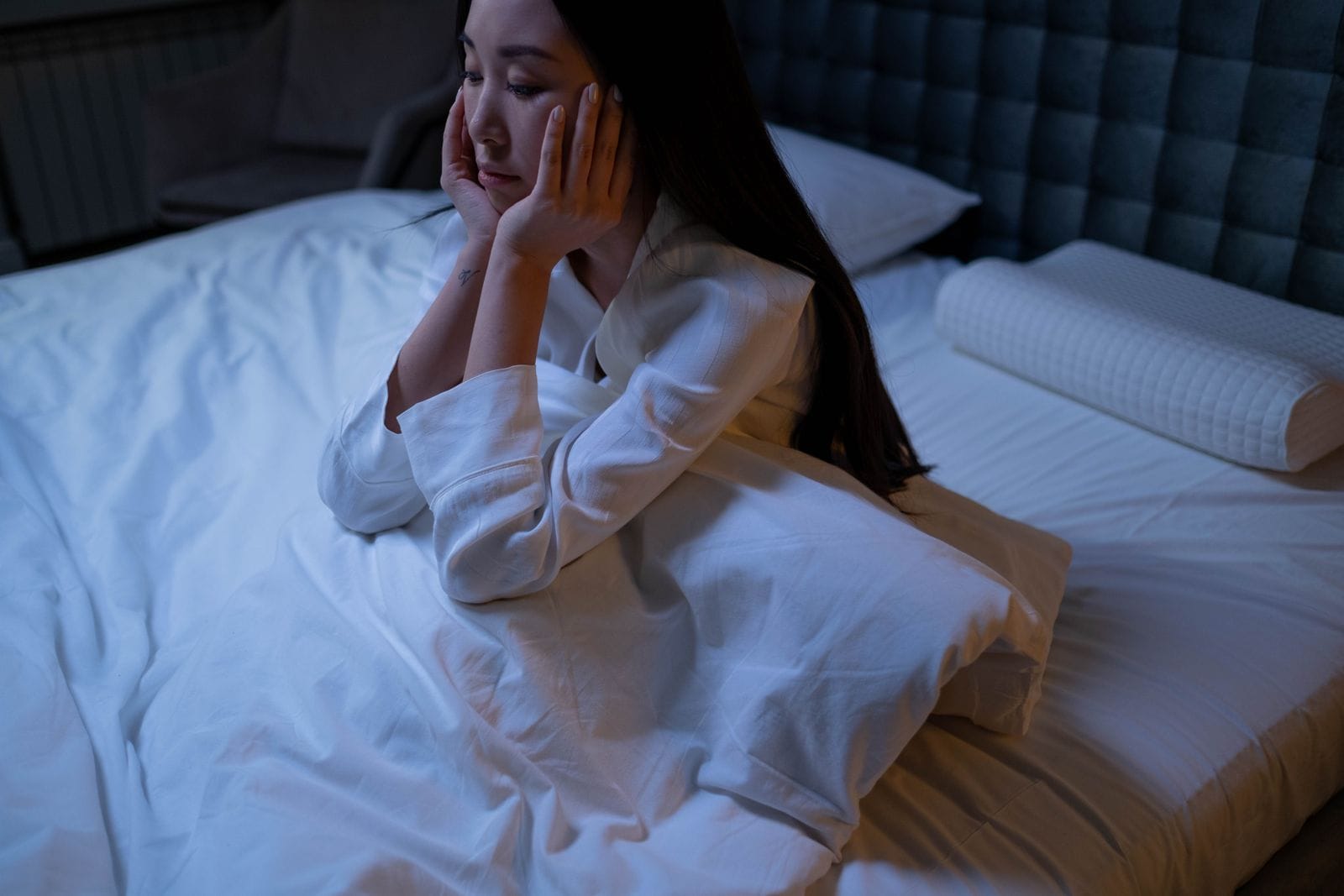
You wake up at 3 a.m. with your pajamas damp and your sheets soaked. You kick off the covers, cool down, and then lie there wide awake. If you are in your 40s or early 50s and your periods have started to change, perimenopause is a likely reason. Night sweats are one of the best-known symptoms of the menopause transition, and for many women they last much longer than expected. Here is why they happen, how long they can last, what actually helps, and when night sweats point to something other than menopause.
Quick answer: Night sweats are hot flashes that happen while you sleep. During perimenopause, changing hormone levels, especially lower estrogen, can make the part of your brain that controls body temperature react to small changes, so your body suddenly heats up and sweats to cool down. Night sweats often last for years: in a large U.S. study, frequent hot flashes and night sweats lasted a median of 7.4 years. Hormone therapy is the most effective treatment. Nonhormonal prescription medicines, cognitive behavioral therapy and weight loss can also help. A cool bedroom and layered bedding can make nights easier. See a provider if night sweats keep waking you up, or if they come with a fever, weight loss or other new symptoms.
Below, we explain what is happening in your body, how to tell menopause night sweats apart from other causes, the treatments with real evidence behind them, and how hormone care in Burbank works at XELOR.
What are night sweats?
Night sweats are hot flashes that happen at night. A hot flash is a sudden wave of heat, often with sweating. According to Mayo Clinic, one hot flash may last 1 to 5 minutes. At night, that can be enough to wake you up and leave your nightclothes or bedding wet.
Mayo Clinic describes true night sweats as repeated episodes of very heavy sweating during sleep, heavy enough to soak your nightclothes or bedding. Waking up a little warm because your bedroom is hot or you are sleeping under too many blankets usually does not count.
Why does perimenopause cause night sweats?
Perimenopause is the time before your final period when your hormone levels rise and fall unevenly. Mayo Clinic notes that changing hormone levels before, during and after menopause are the most common cause of hot flashes.
Researchers are still learning exactly how it works. Most research suggests that lower estrogen levels make your body’s internal thermostat, a part of the brain called the hypothalamus, react to slight changes in body temperature. When the hypothalamus thinks your body is too warm, it starts a chain of events to cool you down. That is why you can go from comfortable to overheated and sweaty in a minute, even in a cool room.
Some things raise your odds. Mayo Clinic lists smoking and having obesity as risk factors, and notes that more Black women report hot flashes during menopause than women of other races.
How long do perimenopause night sweats last?
Often longer than women expect. The Study of Women’s Health Across the Nation (SWAN) followed women in the U.S. through the menopause transition. Among 1,449 women with frequent hot flashes or night sweats:
- The symptoms lasted a median of 7.4 years in total.
- They continued for a median of 4.5 years after the final period.
- Women whose frequent symptoms began early, while their periods were still regular or had just started to change, had them the longest: a median of more than 11.8 years.
- African American women reported the longest duration of any group, a median of 10.1 years.
The researchers concluded that women should be told to expect that frequent symptoms could last more than 7 years. That is why it makes sense to treat night sweats that bother you, rather than wait for them to pass.
Can night sweats affect your sleep and health?
Yes. Mayo Clinic notes that night sweats may wake you from sleep and can cause long-term sleep loss. Broken sleep night after night can leave you tired during the day and make other perimenopause symptoms harder to cope with. Poor sleep can even make aches and pains feel worse, as we explain in our guide to menopause joint pain.
Could night sweats be something other than perimenopause?
Yes, and this is important. Menopause is one of many possible causes of night sweats. Mayo Clinic lists others, including:
- Medicines, such as some antidepressants and some diabetes medicines that lower blood sugar
- Thyroid problems, such as an overactive thyroid (hyperthyroidism)
- Infections, such as tuberculosis
- Sleep disorders, such as obstructive sleep apnea
- Anxiety disorders and alcohol use disorder
- Some cancers, such as lymphoma and leukemia
There are clues. Mayo Clinic notes that night sweats caused by an illness usually come with other symptoms, such as a fever, weight loss, pain in one area, a cough or diarrhea. Night sweats that start months or years after your menopause symptoms ended also need a check. A provider can sort out the cause with a few questions, an exam and, if needed, lab tests.
What helps night sweats at home?
These steps can make your nights more comfortable. The National Institute on Aging suggests that you:
- Keep your bedroom cool, and turn on a fan.
- Layer your bedding so you can adjust it during the night.
- Wear layers you can take off when a hot flash starts.
- Drink small amounts of cold water before bed.
- Avoid alcohol, spicy foods and caffeine, which can make menopause symptoms worse.
- Try to quit if you smoke.
- Notice what seems to trigger your hot flashes, and how much they bother you.
Be realistic about what these steps can do. In its 2023 review of the research, The Menopause Society did not recommend cooling techniques, avoiding triggers, exercise or yoga as treatments for hot flashes, because the evidence that they reduce hot flashes is not strong enough. They are still worth doing for comfort, and regular exercise is good for your heart, bones and mood. But if night sweats keep waking you up despite your best efforts, that is not a failure on your part. It is a sign to talk about treatment.
What treatments work for night sweats?
The Menopause Society has reviewed the research on both hormone and nonhormone treatments for hot flashes and night sweats. Here is what it found:
| Option | What the research says |
|---|---|
| Hormone therapy | The most effective treatment for hot flashes and night sweats |
| Nonhormonal prescription medicines | Recommended: certain antidepressants (SSRIs and SNRIs), gabapentin, fezolinetant and oxybutynin |
| Cognitive behavioral therapy (CBT) and clinical hypnosis | Recommended |
| Weight loss | Recommended |
| Supplements, herbal remedies and soy | Not recommended |
| Paced breathing and acupuncture | Not recommended |
Source: The Menopause Society 2022 Hormone Therapy Position Statement and 2023 Nonhormone Therapy Position Statement.
If you have extra weight, losing some of it is one of the recommended steps. Read our guide on how to lose weight during perimenopause.
Does hormone therapy help night sweats?
Yes. The Menopause Society calls hormone therapy the most effective treatment for hot flashes and night sweats. It also says that for most healthy women with symptoms who are younger than 60 and within 10 years of menopause onset, the benefits of hormone therapy outweigh the risks.
Whether it is right for you depends on your symptoms, your age, your personal and family health history, and your risks. Your provider will go over these with you before you decide. Read more about whether you might need hormone therapy and how bioidentical hormone therapy compares with conventional hormone therapy.
What if you can’t or don’t want to take hormones?
You still have good options. The Menopause Society says nonhormone treatments should be offered to women who cannot take hormone therapy for medical reasons, or who simply prefer not to. Its recommended options include certain antidepressants (SSRIs and SNRIs), gabapentin, fezolinetant, oxybutynin, cognitive behavioral therapy, clinical hypnosis and weight loss.
In 2023, the FDA approved fezolinetant (Veozah), a once-daily pill for moderate to severe hot flashes caused by menopause. It works by blocking a signal in the part of the brain that helps regulate body temperature. It requires blood tests to check your liver before you start and during treatment.
Like all prescription medicines, these can have side effects, and they are not right for everyone. A provider should review your health history and your other medicines with you first.
When should you see a provider about night sweats?
Make an appointment if your night sweats:
- Happen regularly or keep waking you up
- Come with a fever, weight loss you can’t explain, pain in one area, a cough or diarrhea
- Start months or years after your menopause symptoms ended
- Started after you began a new medicine
- Are affecting your mood, your work or your relationships
Do not stop a prescribed medicine on your own. Talk with the provider who prescribed it first.
Before your visit, note when your night sweats started compared with changes in your periods, how often they happen, what seems to trigger them, and which medicines and supplements you take.
How does XELOR help with night sweats?
At XELOR, night sweats are looked at together with your hormones, your sleep and your overall health, because in midlife they are often connected.
- Your XELOR Blueprint visit. An in-depth visit with a board-certified nurse practitioner. Your provider reviews your symptoms, health history, medicines and labs. It is $399 with the XELOR lab panel, or $299 with your own labs from the last 60 days.
- Labs that look for causes. Your labs can include thyroid levels, so a look-alike cause is not missed.
- A plan for your symptoms. Your provider explains your treatment options, benefits and risks, including hormone therapy, bioidentical hormone pellets for some patients, and nonhormonal prescription options. Our XELOR Harmony hormone membership is $349 a month or $3,490 a year. Medication, when prescribed, is billed separately by the pharmacy, and follow-up lab tests are billed separately.
- The right referral when needed. If your exam or labs point to another cause, such as a sleep disorder, we help you get to the right specialist.
Knarik Oganesyan, APRN, DNP, FNP-C, PMHNP-BC, is board certified in both family practice and psychiatric mental health. Visits are available in person in Burbank or by telehealth anywhere in California. See every price on our pricing page, or read how much hormone therapy costs.
Frequently asked questions
What do perimenopause night sweats feel like?
Most women feel a sudden wave of heat, then sweating, sometimes enough to soak their nightclothes or sheets. One hot flash may last 1 to 5 minutes, and night sweats often wake you up.
Can you have night sweats in perimenopause while you still have periods?
Yes. In the SWAN study, some women’s frequent hot flashes and night sweats began while their periods were still regular or had just started to change, and those women had symptoms the longest.
How long do night sweats last in perimenopause?
In the SWAN study, frequent hot flashes and night sweats lasted a median of 7.4 years, and a median of 4.5 years after the final period. Some women have them for more than 10 years.
How can I stop night sweats without hormones?
Nonhormonal prescription medicines, cognitive behavioral therapy, clinical hypnosis and weight loss all have evidence behind them. A cool bedroom, layered bedding and avoiding your triggers can make nights more comfortable, but they have not been proven to reduce hot flashes on their own.
When are night sweats a warning sign?
See a provider if night sweats come with a fever, weight loss you can’t explain, pain in one area, a cough or diarrhea, or if they start months or years after your menopause symptoms ended.
Book Your Visit or call +1(747) 292-6886.
Sources
- Avis NE, Crawford SL, Greendale G, et al. Duration of menopausal vasomotor symptoms over the menopause transition. JAMA Internal Medicine, 2015;175(4):531-539 (SWAN study).
- The North American Menopause Society (now The Menopause Society). The 2023 nonhormone therapy position statement of The North American Menopause Society. Menopause, 2023;30(6):573-590.
- The Menopause Society. 2022 Hormone Therapy Position Statement. July 2022.
- Mayo Clinic. Hot flashes: Symptoms and causes. September 3, 2026.
- Mayo Clinic. Night sweats: Causes. January 20, 2024.
- National Institute on Aging. Hot Flashes: What Can I Do?
- U.S. Food and Drug Administration. FDA Approves Novel Drug to Treat Moderate to Severe Hot Flashes Caused by Menopause. May 12, 2023.
Written by the XELOR editorial team. Medically reviewed by Knarik Oganesyan, APRN, DNP, FNP-C, PMHNP-BC. Last reviewed: November 18, 2026.
This article is for general education and is not medical advice. Treatment decisions are made only after a consultation, a review of your health history, and lab work with a licensed provider. Prices are current as of November 18, 2026 and may change. Individual results vary.